
Is your construction budget pointed at a house — or the full project?

Why your rural project budget needs to be tested before design starts — not after
Most clients who come to a first design meeting with a rural project have a budget indication. They arrived at it honestly — through research, through conversations, through a sense of what a home like theirs should cost. What that indication almost never accounts for is the full scope of what a rural project actually requires. And on a site with planning overlays, a slope, a dam, and farm structures, that gap is significant.
What most people do
The conventional approach to a rural residential project looks like this: a client brings a brief and a budget, a designer starts drawing, and the scope expands as the reality of the site becomes clear. The dam licence gets raised at a planning meeting three months in. The wastewater treatment system turns out to be a full civil engineering item, not a standard septic connection. The farm sheds — even those that might be partially exempt from planning permits — still need to be designed, documented, and built. The driveway on a sloped rural block built to emergency vehicle standard is not a suburban driveway. By the time all of those items are properly understood, the budget that was formed around a house is being asked to carry a rural development.
That is not an unusual scenario. It is how a significant number of rural residential projects proceed. Design starts, scope expands, and the programme and budget absorb the cost of discoveries that could have been named earlier.
Why it matters
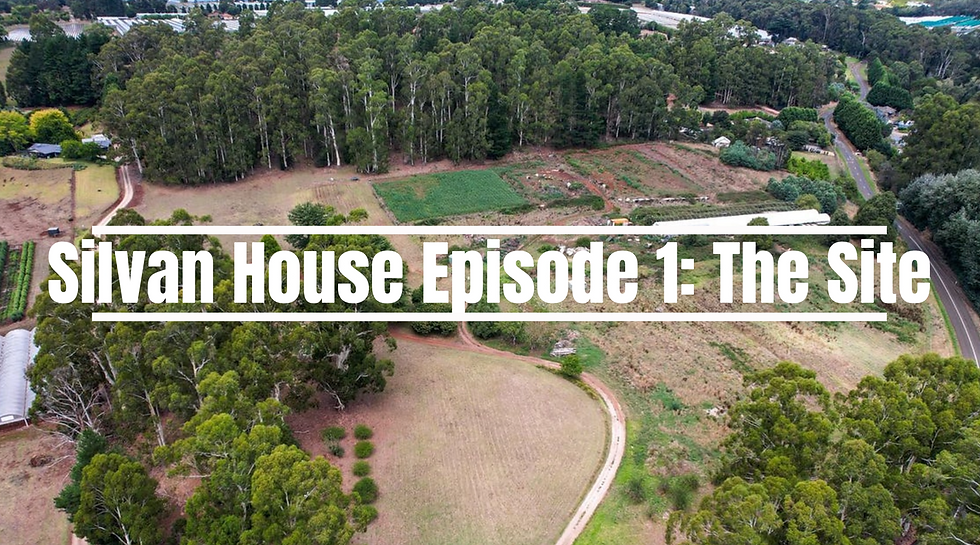
In the Green Wedge Zone — the planning zone that covers most rural land on Melbourne's fringe, including Silvan where this project sits — every new dwelling is mandated to have an all-weather emergency access road suitable for emergency vehicles, a full alternative wastewater treatment and retention system, a potable water supply with firefighting storage, and an electricity connection. None of those appear on a floor plan. All of them have a cost that exists before the house construction begins.
Add a properly constructed agricultural dam — which requires a Water Act 1989 licence from Southern Rural Water, a government process running completely independently of the planning permit with its own lead time — and the scope extends well beyond the dwelling.
On this project, the Bushfire Attack Level rating — BAL — is unknown until the bushfire consultant assesses the proposed siting. On a large footprint home with extensive north-facing glazing, the difference between a low BAL rating and a high one runs to tens of thousands of dollars across the building envelope. That range sits over the budget until the consultant confirms the number.
A budget indication formed around a house figure is a different number from an indication that carries the full rural development scope. Finding that gap at concept, before design is loved, is a scoping conversation. Finding it at tender, after the design is approved and the clients have months of attachment to it, is a redesign conversation.
What to do instead
Before design starts on a rural project, three things need to be established. First: the full brief — not just the room list, but how the family actually lives and what the home has to fix. Second: the full scope — everything the site and the planning zone require, not just the dwelling. Third: whether the budget is correctly calibrated against that full scope, with each component as a separate line item.
The way to establish the third point is to involve a builder at concept stage — not contracted to build, but contributing genuine cost intelligence as the design develops. On a sloped rural site in the Dandenong Ranges, that means rural construction rates at this specific location, a view on what the slope adds to the civil works, and the discipline to separate the scope into components so the numbers are honest before anything is locked.
This is not a tender exercise. It is a scope conversation. And it is worth having before the design starts, not after it is finished.
On the Silvan project, that conversation is structured into Concept Design from week one — dwelling, farm structures, dam, driveway, services, and site works as separate line items, running alongside the design as it develops. Every decision the clients make about what the house includes is made with a clear understanding of what it costs and what it competes with in the budget.
Closing
Budget is a design input. The earlier that conversation happens — before the brief is loved, before the concept is approved, before the planning permit is lodged — the more it shapes the design productively rather than forcing it to be redesigned. A rural project that starts with an honest picture of its full scope is a different project from one that discovers it along the way.
If you are at this stage with a rural project in Victoria and want to understand what the full scope actually involves before committing to a design — that is a conversation worth having before the next decision is made.
Comments